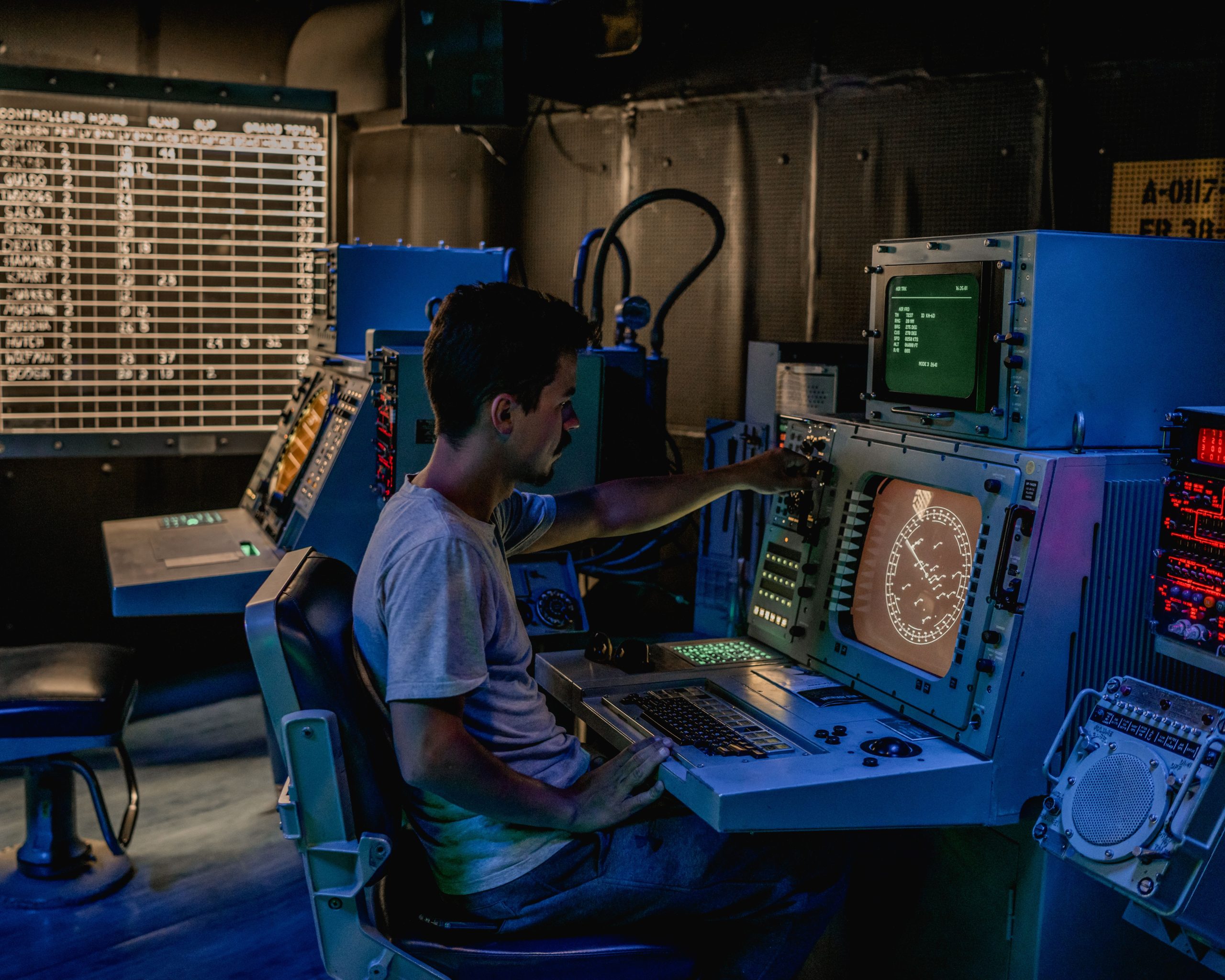
Nobody designs a data hall for people to spend time in. It’s loud. Air rushes past constantly, and walking from one aisle to the next can feel like stepping from a fridge into a warm kitchen. The racks all look the same. All of those matters for a data hall fire watch, because the usual ways a person notices a fire, like smelling it, hearing it or seeing smoke, don’t work quite as well in here.
The Hall Itself
Most halls use a hot aisle and cold aisle layout. Cold air gets pulled in through the front of each rack, runs over the servers and comes out the back, warmer, into the next aisle. A lot of facilities go a step further with containment, putting doors and panels around either the hot or the cold aisles so the two airstreams don’t mix.
On top of that, there’s the noise of fans and cooling units, cable trays running overhead, and in many halls, lights that switch on and off with motion sensors. Walking it is nothing like checking an office floor.
How Does Containment Affect Smoke?
It changes where smoke goes, sometimes in ways that aren’t obvious. That’s a big reason many halls rely on aspirating detection, which pulls air samples through a network of pipes and checks them constantly for tiny traces of smoke.
What a Patrol Looks For in the White Space
The guard isn’t there to figure out whether a server is faulty. They’re looking for fire, or for anything that makes a fire more likely. A burning smell, or that sharp hot-electrical smell, is the most important thing to pick up, along with any haze in the air. Leftover cardboard or packaging from an install is worth noting, and so are containment doors wedged open, blocked exits, or extinguishers that aren’t where they should be.
During a data hall fire watch, all of this gets written down with the time and location. Anything urgent goes straight to whoever the facility has named in its escalation plan, without waiting for the round to finish.
Why the Senses Work Differently Here
Normally people notice fires because they smell something, see something or hear something. In a data hall, each of those is harder. Fan noise drowns out small sounds like crackling. The constant airflow thins out smoke and smells before they can build. And with long rows of tall racks, the view is blocked in most directions, so a guard on the main aisle might have no idea what’s going on three rows over.
Knowing What Happens if an Alarm Goes Off
Some halls are protected by clean agent systems, and even during an impairment, parts of the system may still be live. If that alarm goes off, the right response is to leave the room and report it. Staying to investigate isn’t part of the job.
It also helps to know what the facility’s own staff will do in an emergency, so the guard isn’t working against them. That’s normally covered in the briefing before the first shift, along with the floor layout and which zones are affected.
Staying Out of the Way
Data halls run on strict rules, and a fire watch is no exception. Guards shouldn’t touch equipment, open cabinets, reset anything or lift floor tiles. They need to follow whatever escort and access rules the facility uses, and they should know exactly who to call for what.
A well-briefed guard can do all of this quietly, which is usually what operators want. The patrol should be thorough without becoming one more thing the operations team has to keep an eye on.